Just as the diffusion of linguistic features may be halted by natural geographical barriers, it may also be impeded by social class stratification. however, the boundaries between social dialects tend for the most part not to be absolute. An isogloss is a geographical boundary line marking the area in which a distinctive linguistic feature commonly occurs. adjective: isoglossal or isoglossic. also known as heterogloss. from the greek, "similar" or "equal" + "tongue". Isogloss definition is a boundary line between places or regions that differ in a particular linguistic feature. A political boundary is an imaginary line separating one political unit, such as a country or state, from another. sometimes these align with a natural geographic feature like a river to form a border or barrier between nations. occasionally, two countries may contest where a particular border is drawn.
Linguistics The Prague School Britannica
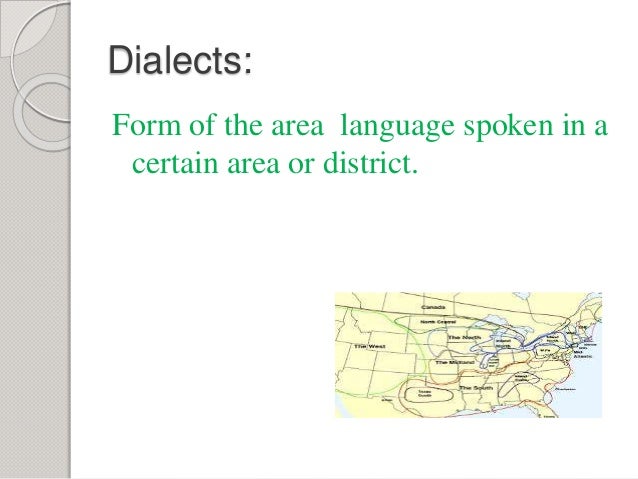
More linguistic feature boundary images. Cultural competence involves understanding and appropriately responding to the unique combination of cultural variables and the full range of dimensions of diversity that the professional and client/patient/family bring to interactions. "culture and cultural diversity can incorporate a variety of factors, including but not limited to age, disability, ethnicity, gender identity (encompasses. What does isogloss mean? the definition of an isogloss is a line on a map that marks the boundary between areas where language features are diffe. Cipled basis for dividing dialects and drawing the boundaries (or isoglosses) between them selecting a linguistic linguistic feature boundary feature that will be used to classify and define .
Navarre (english: / n ə ˈ v ɑːr /; spanish: navarra; basque: nafarroa; occitan: navarra), officially the chartered community of navarre (spanish: comunidad foral de navarra [komuniˈðað foˈɾal de naˈβara]; basque: nafarroako foru komunitatea [nafaro. ako foɾu komunitate. a]), is an autonomous community and province in northern spain, bordering the basque autonomous community, la rioja. A common production of linguistic investigators of dialects is the shaded and dotted map showing to show where one linguistic feature ends and another begins or linguistic feature boundary overlaps. various compilations of these maps for england have been issued over the years, including joseph wright's english dialect dictionary (1896–1905), the survey of english.
Personal pronouns in particular seem to differentiate the two divisions, a feature that has been used to revise the eastern boundary of non-pama-nyungan. among the most convincing cognates linking pama-nyungan and non-pama-nyungan are a small set of monosyllabic verb stems that appear to be derived from a common element in an older language. Jan 17, 1997 · the sorites paradox originated in an ancient puzzle that appears to be generated by vague terms, viz. terms with unclear (“blurred” or “fuzzy”) boundaries of application. ‘bald’, ‘heap’, ‘tall’, ‘old’, and ‘blue’ are prime examples of vague terms: no clear line divides people who are bald from people who are not, or blue objects from green (hence not blue), or old. Step 3: quantifying stylistic features from text for relatively easy feature extraction from texts, the software linguistic inquiry and word count (liwc; pennebaker, booth, & francis, 2007) can be. This leads us to the question of boundary what marks the beginning and end of a community? cohen’s argument is that boundaries may be marked on a map (as administrative areas), or in law, or by physical features like a river or road. some may be religious or linguistic.
This is the only feature in which i find myself in significant disagreement with the anae: i have found that the pin-pen merger area is much larger than they show, especially in the west. [1] (see the pin-pen merger, the kansas-nebraska act, and the texas cattle drives below. ) 6-aug. -2011. Popular music of today in no way influenced by bruce. springsteen has a long road of music but it is in no way evolving. it’s quickly fallen behind the likes of today’s centrists like taylor swift and drake who rather than appropriate a working-class aesthetic, push the boundary of genre. 1 : a boundary line between places or regions that differ in a particular linguistic feature. 2 : a line on a map representing an isogloss.
An isogloss, also called a heterogloss (see etymology below), is the geographic boundary of a certain linguistic feature, such as the pronunciation of a vowel, . Isoglosses of various linguistic phenomena rarely coincide completely, and by would have to be replaced by maps showing the distribution of each particular linguistic feature boundary feature. there are linguistic boundaries called isoglosses that may date b. An isogloss is a geographical boundary line marking the area in which a distinctive linguistic feature commonly occurs. adjective: isoglossal or isoglossic. Recurrent sequence-to-sequence feature prediction network that maps character embeddings to mel-scale spectrograms, followed by a modconcatenative synthesis had with boundary artifacts. however, the verse problem. however, in comparison to the linguistic and acoustic features used in wavenet, the mel spectrogram is a simpler, lower-.
Pdf Linguistic Inquiry And Word Count Liwc
Pictish is the extinct language spoken by the picts, the people of eastern and northern scotland from late antiquity to the early middle ages. virtually no direct attestations of pictish remain, short of a limited number of geographical and personal names found on monuments and the contemporary records in the area controlled by the kingdoms of the picts, dating to the early medieval period. World war i would prove to be a watershed in the imperial relationship between britain and india. 1. 4 million indian and british soldiers of the british indian army would take part in the war, and their participation would have a wider cultural fallout: news of indian soldiers fighting and dying with british soldiers, as well as soldiers from dominions like canada and australia, would travel. Direct mapping of language dialects is not really helpful for several reasons: dialects are, or can be defined using social or political features rather than “linguistic” features. (consider that the debate on what is a variation, a dialect, or a language can be seen as a linguistic issue or as a social, and therefore also a political issue. ). An isogloss, also called a heterogloss (see etymology below), is the geographic boundary of a certain linguistic feature, such as the pronunciation of a vowel, the meaning of a word, or the use of some morphological or syntactic feature.
A language border or language boundary is linguistic feature boundary the line separating two language areas. the term also, an inherited language may evolve and perhaps absorb some of the characteristics or terms of the new area's predominant language.
Oct 25, 2019 · one of the most exciting new features in apex 19. 2 is faceted search. faceted search (or faceted navigation) is seen pretty often on the internet; typically on shop or sales web sites. the end user can set filters using facets on the left or upper side of the screen. a facet shows possible values together with the occurrence count within the result set. The linguistic features also vary according to the linguistic structures. these are pairings of form and meaning. any specific pairing of form and meaning is regarded as a saussurean sign. Cultural and linguistic competence is as important to the successful provision of services as are scientific, technical, and clinical knowledge and skills. the asha code of ethics (asha, 2016) contains the fundamentals of ethical conduct, which are described by principles of ethics and by rules of ethics. Chapter 6 terms, language learn with flashcards, games, and more — for free. a geographic boundary within which a particular linguistic feature occurs, but .


0 comments:
Posting Komentar